






Sustainability in Flip-Flops: Recycled & Vegan Options Explained
The footwear industry is evolving, and flip-flops—one of the world’s most-used warm-weather shoes—are finally catching up. Traditionally made from virgin plastics and synthetic foams, flip-flops have long contributed to beach waste, microplastics, and landfill buildup. Today, brands are shifting toward greener solutions, offering recycled and vegan options that feel just as comfortable and durable as traditional models.
Using the same principles highlighted in well-designed flip-flops—secure strap styles, cushioned footbeds, durable outsoles, and water-friendly materials—this guide explains how sustainable flip-flops are made, what recycled and vegan versions look like, and how to choose a pair that’s both comfortable and kinder to the planet.
Why Sustainability Matters in Flip-Flops
Flip-flops are lightweight, inexpensive, and worn everywhere. But those same qualities mean millions of pairs are discarded each year, often ending up on beaches or floating in oceans. Sustainable options reduce the environmental footprint in a category that has historically relied heavily on plastic and petroleum-based materials.
Key environmental concerns include:
- Microplastic shedding from EVA and foam materials.
- Short lifespan of low-quality flip-flops that wear out quickly.
- High waste generation due to mass production and mass disposal.
- Material toxicity from dyes, glues, and petroleum-derived components.
Sustainable flip-flops aim to reduce these impacts through recycling, responsible sourcing, bio-based materials, and cruelty-free finishes.
What Makes a Flip-Flop Sustainable?
Just like strap style and footbed contour determine comfort, material choice determines environmental impact. A sustainable flip-flop may include several eco-friendly aspects working together:
- Recycled materials (plastic bottles, reclaimed rubber, recycled EVA foam).
- Bio-based materials (sugarcane EVA, cork, natural rubber).
- Vegan components (no leather, wool, or animal-derived adhesives).
- Low-impact dyes and reduced chemical treatments.
- Ethical manufacturing with fair labor and reduced waste practices.
A sustainable flip-flop doesn’t have to feel “eco”—many look and perform exactly like conventional pairs but with far less harm.
Recycled Flip-Flops: How They’re Made
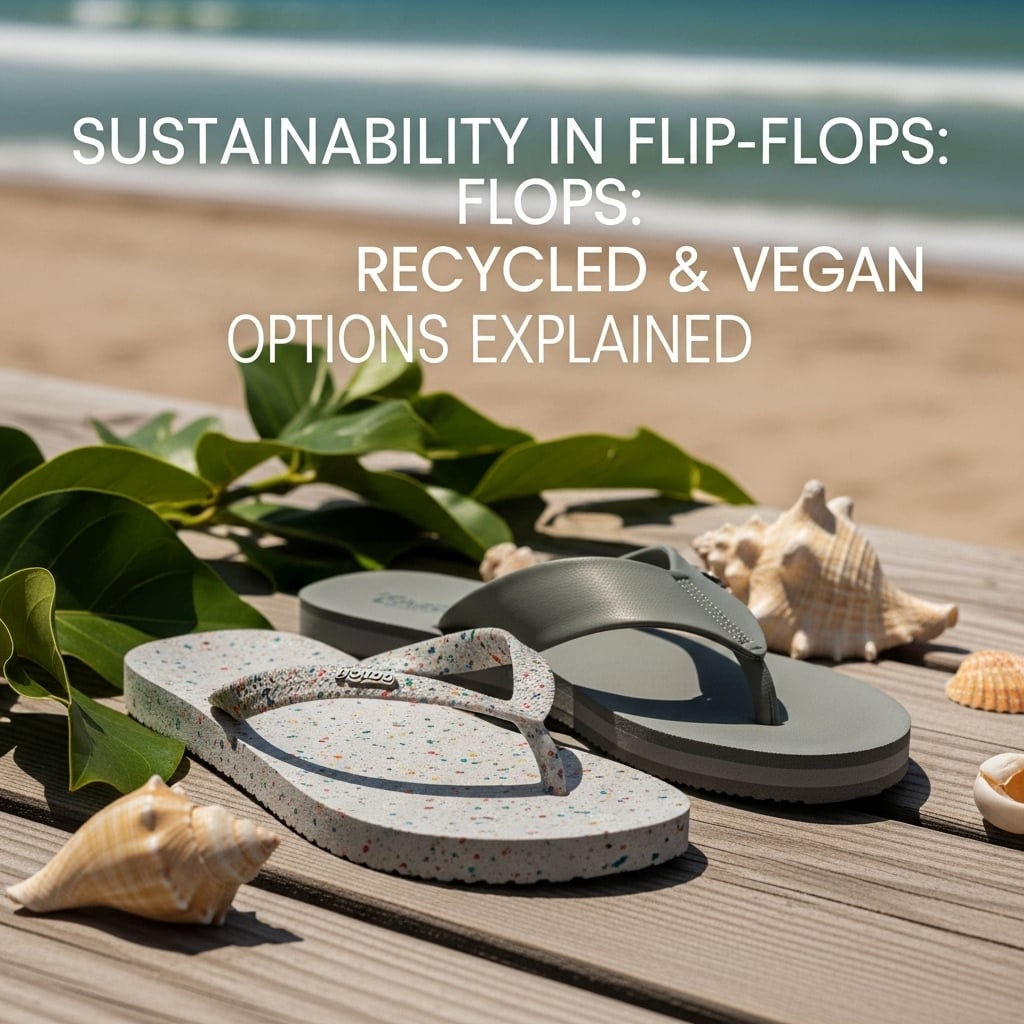
Recycled flip-flops use repurposed materials that would otherwise become pollution. These materials are reprocessed into new outsoles, straps, and footbeds that perform just like their virgin counterparts.
1. Recycled Plastic (rPET)
Recycled PET—from used water bottles and food containers—is melted down and spun into durable straps. Fabric-thong straps made from rPET are soft, flexible, and extremely comfortable, making them perfect for long outdoor days.
2. Recycled EVA Foam
EVA scrap from factory floors and post-consumer foam is cleaned, ground, and re-molded into new footbeds. High-quality recycled EVA retains:
- excellent cushioning,
- shock absorption,
- lightweight comfort.
It’s a major step toward reducing waste in one of the most commonly used flip-flop materials.
3. Recycled Rubber
Reclaimed rubber—often sourced from old footwear, tires, or manufacturing leftovers—is reprocessed into durable, slip-resistant outsoles. This gives flip-flops the grip and traction needed for beach days, boardwalks, and pool areas.
Vegan Flip-Flops: What They Actually Mean
Vegan flip-flops go beyond being leather-free. They exclude all animal-derived components, including glues and dyes. Many vegan pairs are also highly sustainable because they rely on plant-based and synthetic materials that use fewer natural resources.
Common Vegan Materials
- Plant-based EVA foam made from sugarcane.
- Natural rubber sourced from renewable latex trees.
- Cork footbeds that are breathable, supportive, and biodegradable.
- Vegan synthetics with no animal adhesives.
- Fabric straps from cotton, hemp, or recycled polyester.
Paired with strategic strap styles—like toe-posts or wide slides—these materials can create supportive, durable flip-flops suitable for daily wear.
How Strap Style Influences Sustainability
The reference highlights how strap design influences comfort, but it also plays a role in sustainability:
- Fabric Thong Straps: Ideal for recycled materials like rPET. Soft, breathable, and renewable.
- Toe-Post Straps: High durability with low material use; often made from recycled or plant-based rubber.
- Slide Straps: Great for showcasing vegan synthetics, cork, or bio-based foam overlays.
Simpler strap constructions often produce less waste in manufacturing.
Bio-Based Alternatives: The Future of Flip-Flops
One of the most promising directions in sustainable footwear is the rise of bio-based materials. These options replace petroleum-based components with renewable plant sources.
1. Sugarcane EVA (“Green EVA”)
A renewable plant-based foam that performs like traditional EVA while cutting carbon emissions significantly. It’s soft, flexible, and ideal for heat-friendly footbeds.
2. Natural Rubber
Harvested by tapping rubber trees, natural rubber creates strong, non-slip outsoles without fossil fuels. Its durability makes it perfect for beach, pool, and everyday wear.
3. Cork
Cork footbeds mold to the foot, provide natural shock absorption, and stay cool in warm climates. They’re comfortable and highly sustainable—oak trees regrow cork bark again and again.
Durability: A Key Factor in Sustainability
Sustainability isn’t only about materials—it’s also about lifespan. A durable flip-flop reduces waste more effectively than any recycled material. Well-designed pairs use:
- Structured footbeds that don’t flatten quickly.
- Strong strap anchors that resist stretching or tearing.
- Slip-resistant outsoles that withstand heat and abrasion.
A pair that lasts multiple seasons is more eco-friendly than several cheap pairs replaced throughout the summer.
How to Choose the Most Sustainable Flip-Flops
When shopping for eco-conscious pairs, consider comfort and ethics together. The right balance ensures you love wearing your sustainable footwear—making the purchase worthwhile.
Your sustainable checklist:
- ✔ Made from recycled or bio-based materials
- ✔ Vegan construction (no animal-derived parts)
- ✔ Durable, supportive footbed (arch contour or heel cup)
- ✔ Slip-resistant recycled rubber outsole
- ✔ Water-friendly and heat-resistant materials
- ✔ Low-impact dyes or natural color tones
- ✔ Ethically produced and sourced
Choosing pairs that match these criteria ensures both comfort and environmental responsibility.
How to Care for Sustainable Flip-Flops
Proper care extends the life of eco-friendly flip-flops even further, making them even more sustainable.
- Rinse after beach or pool use to protect materials and prevent salt buildup.
- Dry in the shade to preserve color and prevent warping.
- Clean straps and footbeds regularly with mild soap.
- Avoid leaving them in hot cars where heat can damage foam and rubber.
Final Thoughts
Sustainable flip-flops prove that comfort and eco-consciousness can coexist beautifully. With recycled materials, vegan alternatives, plant-based foams, and responsibly sourced rubber, the industry is moving toward greener options that match the performance of traditional flip-flops—often exceeding them in comfort and durability.
Whether you prefer toe-posts, soft fabric straps, or modern slides, there’s a sustainable version designed for long days at the beach, resort adventures, or everyday errands. By choosing responsibly, you help reduce waste, support ethical production, and step into summer with footwear that truly respects the planet.