

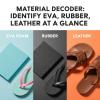


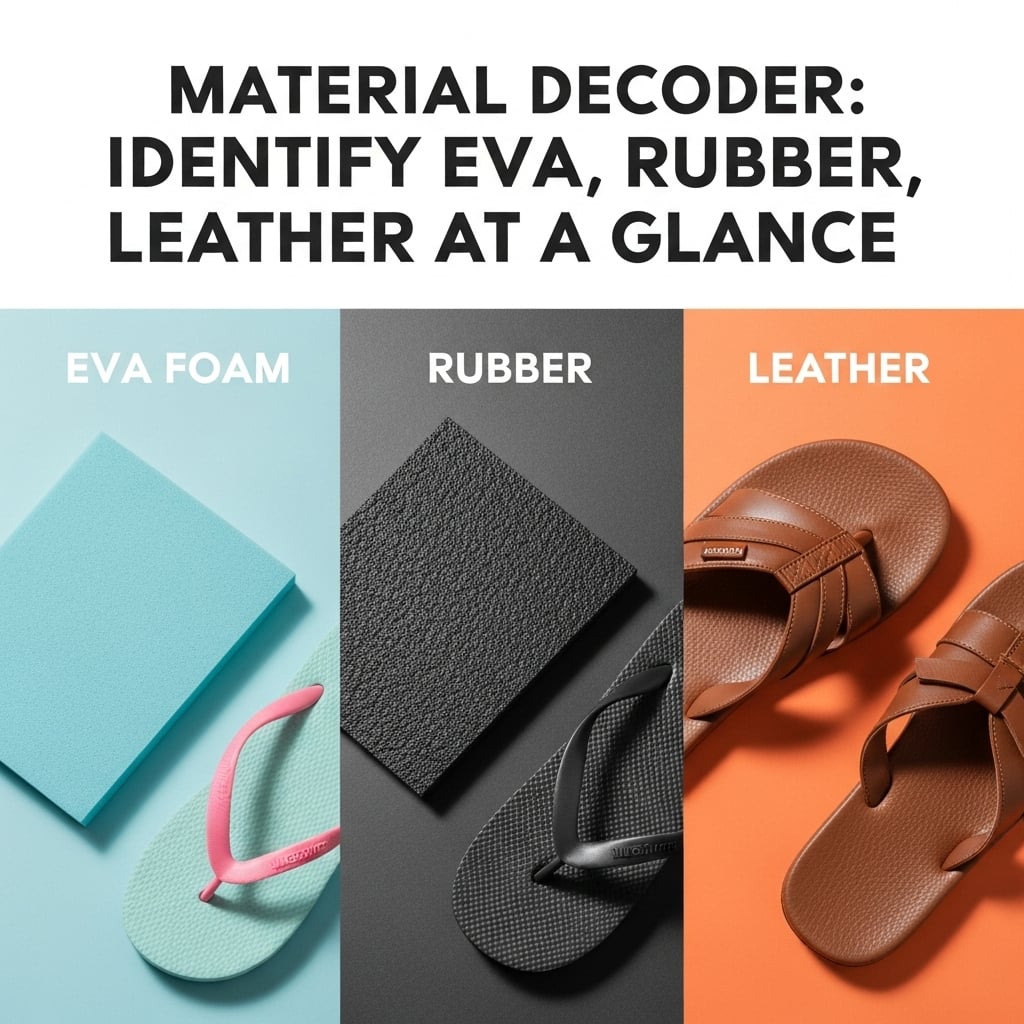
Material Decoder: Identify EVA, Rubber, Leather at a Glance
When browsing flip-flops online or in-store, one of the most overlooked but most important differences is the material used in the footbed, outsole, and straps. Materials determine comfort, durability, heat performance, traction, flexibility, and even how the pair behaves on wet surfaces.
Just like the reference breaks down how strap styles change fit, understanding materials helps you instantly identify whether a pair is soft and cushioned, firm and stable, water-friendly, or built for style. With a little practice, you can tell EVA, rubber, and leather apart in seconds—simply by looking at them.
Why Material Identification Matters
Each material has distinct strengths. EVA is famously cushioned and lightweight; rubber is durable and slip-resistant; leather is stylish and structured. Knowing what you’re buying helps you choose the right flip-flop for:
- beach days,
- rainy-season walking,
- all-day errands,
- travel,
- resort wear,
- or daily casual comfort.
This guide acts as a “decoder”—helping you recognize materials instantly, even from product photos.
1. EVA: Lightweight, Cushioned, Comfortable
EVA (Ethylene Vinyl Acetate) is one of the most common footbed materials in modern flip-flops. It’s soft, flexible, and ideal for long-wear comfort—exactly the properties highlighted in supportive flip-flop design.
How to Identify EVA at a Glance
- Matte or semi-matte finish—never shiny like rubber.
- Smooth, uniform texture with tiny, subtle pores.
- Flexes easily when you bend the sole.
- Very lightweight—EVA sandals feel feather-soft in the hand.
- Soft “bounce-back” feel when you press the thumb into the footbed.
Best Uses
EVA shines when comfort is your priority:
- everyday errands,
- light walking,
- travel,
- beach lounging,
- poolside relaxation.
Pros
- Lightweight and cushioned
- Shock-absorbing
- Water-friendly
- Comfortable straight out of the box
Cons
- Less durable than rubber over time
- Can compress with long-term heavy use
2. Rubber: Durable, Grippy, Heat-Resistant
Rubber is the classic flip-flop material—beloved for its durability, traction, and ability to handle heat, wet surfaces, and rough terrain. Many pairs designed for beach, outdoor use, and rainy climates rely on rubber outsoles or fully rubber construction.
How to Identify Rubber at a Glance
- Slight sheen—a natural glossy or satin finish.
- Visible traction patterns on the outsole.
- Dense, weighty feel compared to EVA.
- Firm flexibility—it bends but not as easily as foam.
- Has a mild “rubber” scent when new.
- More solid texture—no visible foam pores.
Best Uses
- beaches and hot sand,
- water parks,
- boats and docks,
- rainy-season walking,
- outdoor travel routes.
Pros
- Very durable
- Slip-resistant grip
- Better heat resistance than EVA
- Great for wet environments
Cons
- Heavier than EVA
- Less cushioned feel
3. Leather: Stylish, Structured, Premium
Leather flip-flops aren’t meant for oceans or pools—they’re designed for style, breathability, and urban wear. Leather straps or footbeds give flip-flops a polished, fashion-forward edge, turning them into versatile lifestyle sandals rather than beach basics.
How to Identify Leather at a Glance
- Visible grain pattern—natural or embossed texture.
- Soft but structured look—not “foamy” like EVA.
- Stitching details around the edges or straps.
- Matte, smooth finish—not plasticky.
- Natural scent that differs from synthetic materials.
- Darkens or softens with wear (a good sign of real leather).
Best Uses
- city errands,
- casual dinners,
- resort outfits,
- smart-casual summer looks.
Pros
- Stylish and premium-looking
- Conforms to your foot over time
- Highly breathable
- Durable for non-water activities
Cons
- Not water-friendly
- Requires basic care
- More expensive
Visual Quick-Guide
Here’s your at-a-glance decoder for materials:
| Material | Look | Feel | Weight | Best For |
|---|---|---|---|---|
| EVA | Matte, foamy, uniform | Soft, cushioned | Very light | Comfort & daily wear |
| Rubber | Glossy, patterned | Firm, grippy | Medium to heavy | Wet or outdoor use |
| Leather | Natural grain | Smooth, structured | Medium | Fashion & casual wear |
Why Knowing Materials Helps You Choose Better
Once you learn how materials behave, you can instantly understand how a pair will feel on your feet:
- Want softness? → Choose EVA.
- Want grip and durability? → Choose rubber.
- Want style? → Choose leather.
- Want water performance? → Avoid leather and go for rubber or EVA.
Just like the reference breaks down strap styles into practical differences, material decoding helps you read product photos and descriptions with confidence—no guessing, no surprises.
Final Thoughts
Flip-flops may look simple, but materials change everything. With this quick-identification guide, you can instantly recognize EVA’s softness, rubber’s durability, and leather’s refined finish—whether you’re shopping online or standing in front of a store shelf.
Once you know what each material looks and feels like, choosing the right pair becomes effortless. And just like selecting the right strap style, choosing the right material ensures better comfort, better performance, and a pair that fits your lifestyle perfectly.