






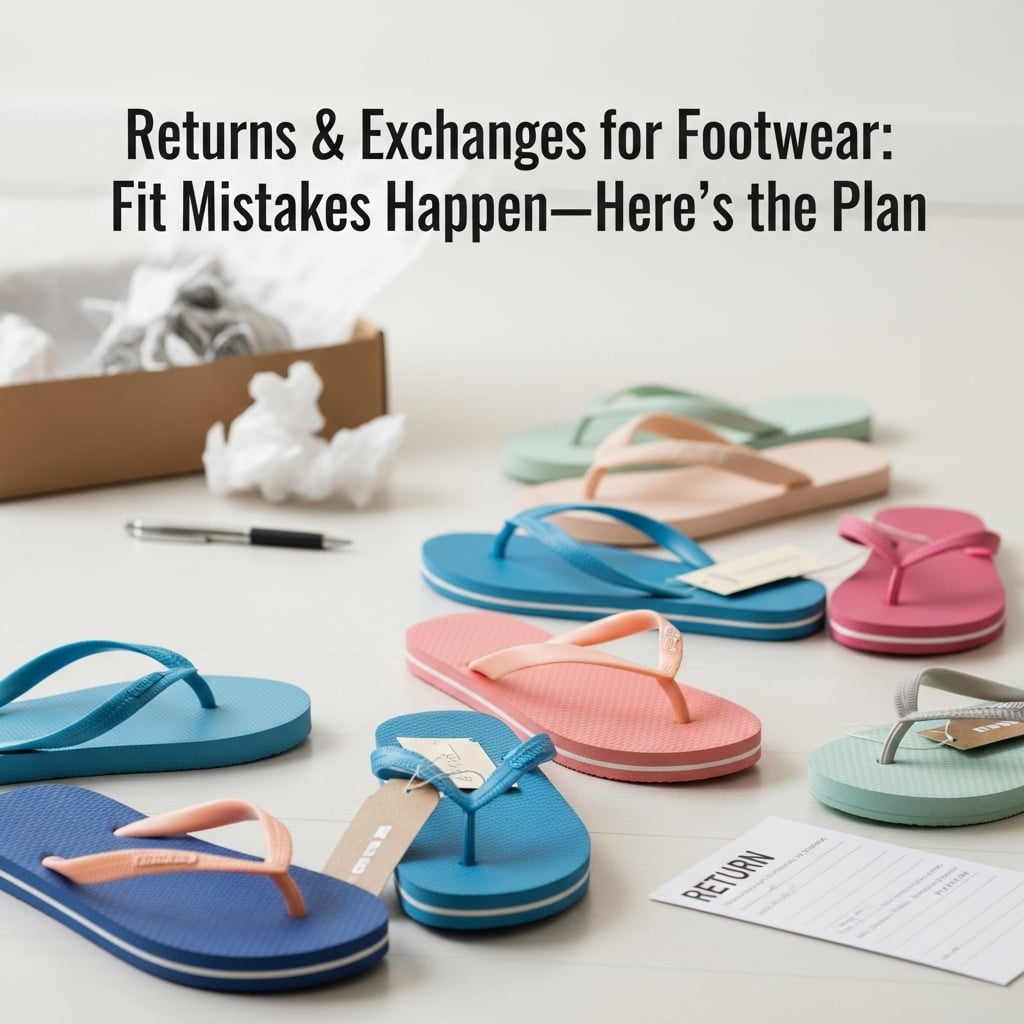
Returns & Exchanges for Footwear: Fit Mistakes Happen—Here’s the Plan
Even with the best size charts, measurement guides, and careful product selection, footwear fit mistakes still happen. A pair can arrive slightly too snug, unexpectedly loose, or simply not feel right once you walk around the house. And that’s normal—especially for flip-flops, slides, and sandals where strap placement, foot shape, and material flexibility all affect fit.
Just as the reference emphasizes how strap styles, footbed contouring, and material behavior change real-world comfort, returns and exchanges exist for the exact same reason: footwear interacts uniquely with every foot. A good returns process isn’t just customer service—it’s part of finding the right fit.
Why Fit Mistakes Are Common in Footwear
Footwear fit is more complex than clothing sizing. Two people with the same shoe size can experience completely different comfort due to:
- Arch height (flat, medium, or high)
- Toe shape (rounded, tapered, square)
- Instep height (low or high)
- Foot width (narrow, standard, wide)
- Strap style (toe-post, fabric thong, slides)
- Material softness and break-in time
A size can be perfect on paper but off once straps meet the foot or a slide touches the instep. That’s why every footwear brand—especially those selling warm-weather sandals—builds returns and exchanges into the shopping experience.
Returns vs. Exchanges: What’s the Difference?
Understanding the difference helps you choose the best path for your situation.
Returns
You send the product back and receive a refund (depending on store policy). Perfect when the size, style, or feel simply isn’t right for you.
Exchanges
You swap the item for a different size, color, or style. This is ideal when the only issue is fit—too tight, too loose, or straps that don’t match your comfort preference.
For most footwear scenarios, **exchanges** are more common since the shopper usually loves the design but needs a better fit.
When to Request an Exchange Instead of a Return
Use these activity-based fit filters (inspired by the reference) to decide:
- Toe-post rubbing? → Try a size up or softer fabric thong strap.
- Straps feel loose? → Size down or choose a slide with structured straps.
- Foot spilling over the edge? → Size up immediately.
- Slides slipping at the heel? → Switch to toe-post for more security.
- Too tight across the instep? → Choose a pair with wider or padded straps.
If the style works but the fit doesn’t, an exchange will likely solve the problem.
The Standard Footwear Return & Exchange Timeline
While exact policies vary, most footwear retailers follow a similar structure:
- Return window: 7, 14, or 30 days from delivery
- Condition: Clean, unworn outdoors, no damage
- Packaging: Original box or protective bag
- Processing time: 1–5 days after the warehouse receives the item
Think of this much like shipping timelines: there’s a flow from request → approval → return shipping → inspection → refund/exchange.
Step-by-Step: How the Process Usually Works
Just like strap-design guides break things into clear steps, the returns process is easiest when you understand each stage.
1. You Submit a Request
This could be through email, a returns portal, or customer support. You simply select “Return” or “Exchange.”
2. You Receive a Return Label
Most retailers provide a prepaid label or instructions. For exchanges, some allow shipping the replacement pair immediately after the label request.
3. Pack the Item Securely
Footwear should be free of dirt, sand, or debris. Pack it in the original packaging when possible.
4. Drop Off the Package
Couriers scan the label and start the return journey (similar to how same-day tracking begins for outgoing orders).
5. Warehouse Inspection
The team checks for wear, condition, and accessories. This ensures the next customer receives a clean product.
6. Refund or Exchange Is Processed
Once approved, refunds are sent back to your payment method or a replacement pair is shipped out.
Common Fit Issues—and What to Exchange For
Here’s how to match your next pair to your comfort needs, using the same strap-style reasoning found in the reference:
1. “The straps feel tight.”
- Try a size up.
- Choose fabric thong straps for softer flexibility.
- Select slides with adjustable or wider bands.
2. “My foot slides side-to-side.”
- Pick a snugger toe-post strap.
- A narrower slide strap can improve midfoot control.
3. “I feel the ground too much.”
- Exchange for thicker EVA cushioning or ergonomic footbeds.
4. “My heel hangs off the back.”
- Size up—no exceptions.
- Choose a more contoured footbed for better alignment.
5. “The toe-post rubs too much.”
- Try a fabric-thong model with softer padding.
- Size up if the strap angle feels too steep.
How to Avoid Needing a Return Next Time
Returns exist for a reason—but a few simple steps can reduce the chances of making the wrong choice again.
- Use the size chart carefully: Measure both length and width.
- Consider your arch type: Higher arches often need contoured footbeds.
- Check the strap style: Toe-post = secure, fabric thong = soft, slides = convenient.
- Read comfort feedback: See if people with similar feet liked the fit.
- Think about your activity: Errands, beach days, and long walks all need different comfort levels.
When Returns Are Not Allowed
Policies vary, but most stores decline returns if:
- The footwear was worn outdoors.
- There is visible damage or dirt.
- The return window has passed.
- Accessories (tags, inserts, hangers) are missing.
This protects product quality and ensures all customers receive clean, fresh pairs.
Final Thoughts
Fit mistakes happen—especially with footwear. But a clear returns and exchanges plan ensures the process is smooth, stress-free, and customer-friendly. Whether your new pair felt too snug, too loose, or simply not quite right, the right exchange can easily fix the problem.
Just like choosing the perfect strap style or footbed support, choosing the right next step—return or exchange—helps you find the pair that truly fits your lifestyle. Comfort isn’t just a feature; it’s the goal. And returns exist to help you get there.