









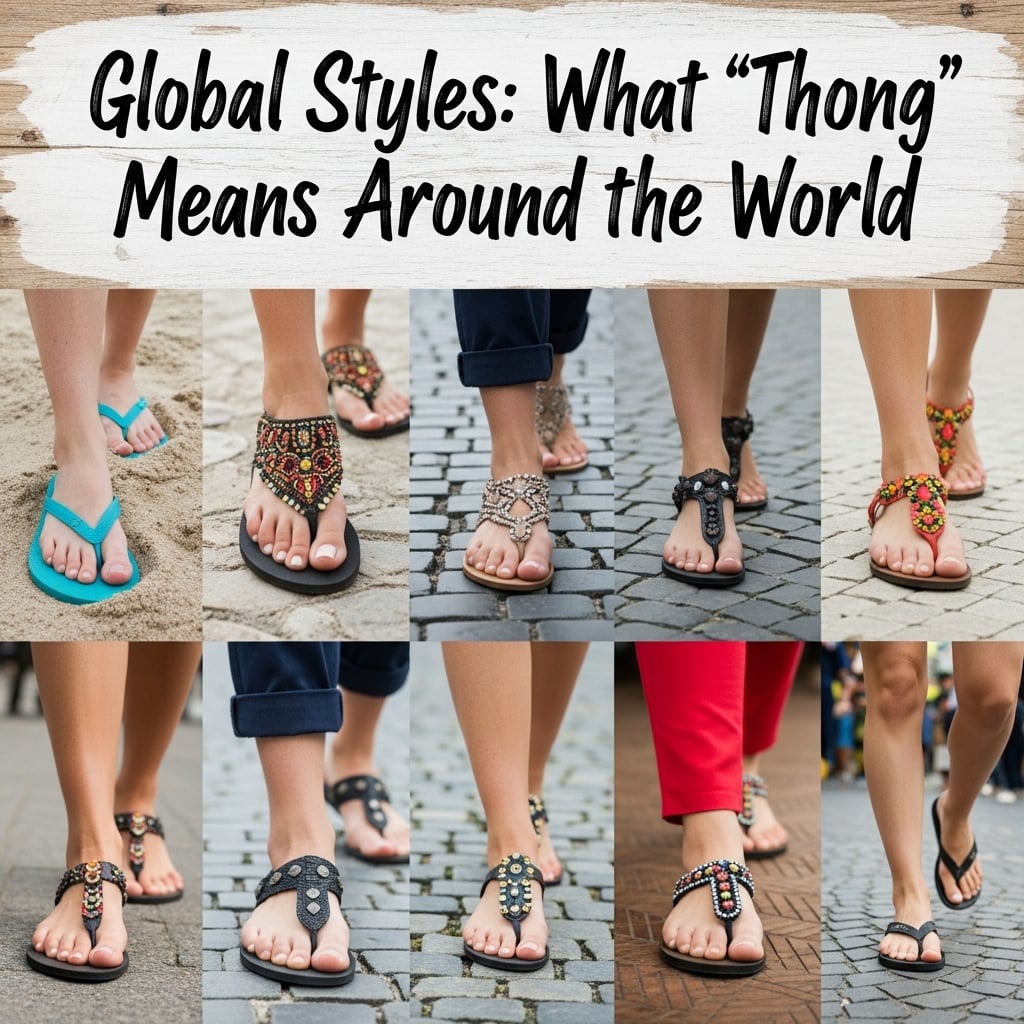
Global Styles: What “Thong” Means Around the World
Flip-flops are one of the world’s most universal footwear styles—lightweight, breathable, and perfect for warm climates. But while the design is globally shared, the name is not. Depending on where you travel, the word “thong” might mean flip-flops, sandals, or even underwear. Understanding these differences helps avoid confusion, especially when shopping abroad, reading product descriptions, or navigating international fashion conversations.
Using the same design principles found in supportive flip-flops—strap construction, toe-post mechanics, fabric-thong softness, and slide strap versatility—this guide explores how different cultures talk about thong-style footwear and how the meanings shift across regions.
Why Terminology Differs Around the World
Language evolves through geography, climate, lifestyle, and culture. Countries with strong beach traditions developed early words for toe-post styles, while cold-weather countries adopted broader terms later. Some regions use casual slang, while others rely on brand-led language or indigenous words.
Understanding global vocabulary helps you navigate product listings, follow fashion trends, and communicate more clearly when talking about styles, strap preferences, and comfort features.
What “Thong” Means in Different Regions
The word “thong” has two major meanings worldwide—but both trace back to the strap style itself. A “thong” fundamentally refers to a narrow strap that sits between two parts of the foot or body. In footwear, it refers to the toe-post strap that goes between the big toe and second toe.
Across the world, though, the word has evolved differently:
United States
In the U.S., the word “thong” overwhelmingly refers to underwear. Therefore, Americans usually call the footwear:
- Flip-flops (most common)
- Sandals (general term)
- Slides (for strap-across styles)
Because “thong” is associated with lingerie, the term is rarely used for footwear in modern American English. Product descriptions instead emphasize toe-post, thong-strap, or Y-strap design.
Australia
Australia proudly uses the word thongs to refer to flip-flops. It’s the most common term and deeply tied to their beach-heavy culture.
Meaning in Australia:
- “Thongs” = flip-flops
- “Thong” (singular) = one flip-flop
Many Australians are surprised to learn that for Americans, the word means underwear. Meanwhile, tourists often get confused when locals say, “Grab your thongs and let’s go to the beach.”
New Zealand
New Zealanders use the term jandals (“Japanese sandals”), a brand name that became a generic word. However, “thongs” is sometimes used as well due to influence from Australian culture.
Common NZ terms:
- Jandals
- Thongs (less common)
- Flip-flops (international term)
United Kingdom
The UK uses the term flip-flops almost exclusively. While “thong” may appear in technical descriptions (e.g., “thong sandal”), the word generally refers to underwear.
For UK shoppers, “thong sandals” simply means toe-post sandals, not lingerie—though the term is used more in retail settings than casual conversation.
Canada
Canadians follow U.S. patterns. “Thong” refers mostly to underwear. The footwear is called:
- Flip-flops
- Sandals
However, older generations may occasionally say “thongs” for flip-flops, a remnant from earlier decades.
Brazil
Brazil is home to some of the most influential flip-flop brands in the world, and the local term is chinelo.
Meaning in Brazil:
- “Chinelo” = flip-flop (general)
- “Chinelo de dedo” = toe-post flip-flop (literally “finger flip-flop”)
- “Chinelo slide” = slide-style sandal
Here, “thong” is not used at all in everyday language; instead, strap style is described directly (toe-post vs slide).
Philippines
In the Philippines, the term tsinelas is used for flip-flops, sandals, or casual slip-ons. The word covers almost all open-toe casual footwear.
While not “thong” by name, the concept of toe-post design (strap between the toes) is well understood, especially for beach styles.
India
India uses several regional terms depending on language and culture, but one widely understood term is chappal.
Meaning in India:
- “Chappal” = sandal or flip-flop
- “Hawaii chappal” = classic flip-flop style
Toe-post styles are extremely common, and the design is often simply called “Hawaiian slippers.”
Hawaii (USA)
Locally, flip-flops are called slippers (“slippahs”). The term reflects the islands’ relaxed culture and universal use of toe-post sandals.
This is one of the few U.S. regions where “slipper” does not refer to indoor bedroom footwear.
Why the Toe-Post Strap Defines the Linguistic Divide
The toe-post strap—the defining feature of thong-style flip-flops—is the reason for the name variations. The same strap style appears worldwide, but its name reflects:
- Local tradition
- Climate and daily use
- Brand influence
- Linguistic borrowing (e.g., “jandals” from “Japanese sandals”)
In the reference, the focus on strap styles—toe-post, fabric thong, slide—mirrors how many cultures categorize footwear. The structure of the shoe often defines the vocabulary used to describe it.
When Retailers Still Use “Thong Sandal”
Even in countries where “thong” means underwear, retailers use the phrase “thong sandal” because it is technically accurate. In product listings, it describes:
- Toe-post construction
- Y-shaped strap style
- Minimalist upper with strong center anchoring
This terminology helps distinguish it from:
- Slides (strap across the foot)
- Fabric thongs (soft woven straps)
- Multi-strap sandals
Global Style Variations Inspired by Strap Preferences
Different regions gravitate toward different strap designs, influenced by climate, terrain, and fashion culture.
- Australia & Hawaii: Favor classic toe-post thongs for beach culture.
- Brazil: Mixes bold colors with both toe-post and slide straps.
- Japan: Inspired the original thong-style zori sandals with fabric toe straps.
- Europe: Growing preference for slide sandals and minimalist thong silhouettes.
- Southeast Asia: Practical, durable designs for everyday wear, often with fabric or rubber straps.
These preferences are deeply tied to lifestyle—whether the priority is comfort, heat resistance, easy cleaning, or fashion.
Final Thoughts
“Thong” may mean different things around the world, but the universal appeal of toe-post flip-flops remains the same. From Australian beaches to Brazilian boardwalks, from New Zealand’s jandals to Hawaii’s slippers, the style transcends language—even if the terminology doesn’t.
Understanding these global differences not only helps avoid misunderstandings but also enriches your appreciation of how cultures embrace the same simple, comfortable footwear. No matter what you call them—flip-flops, thongs, jandals, tsinelas, chinelo—they all celebrate an easygoing, warm-weather lifestyle built on freedom, comfort, and effortless movement.