







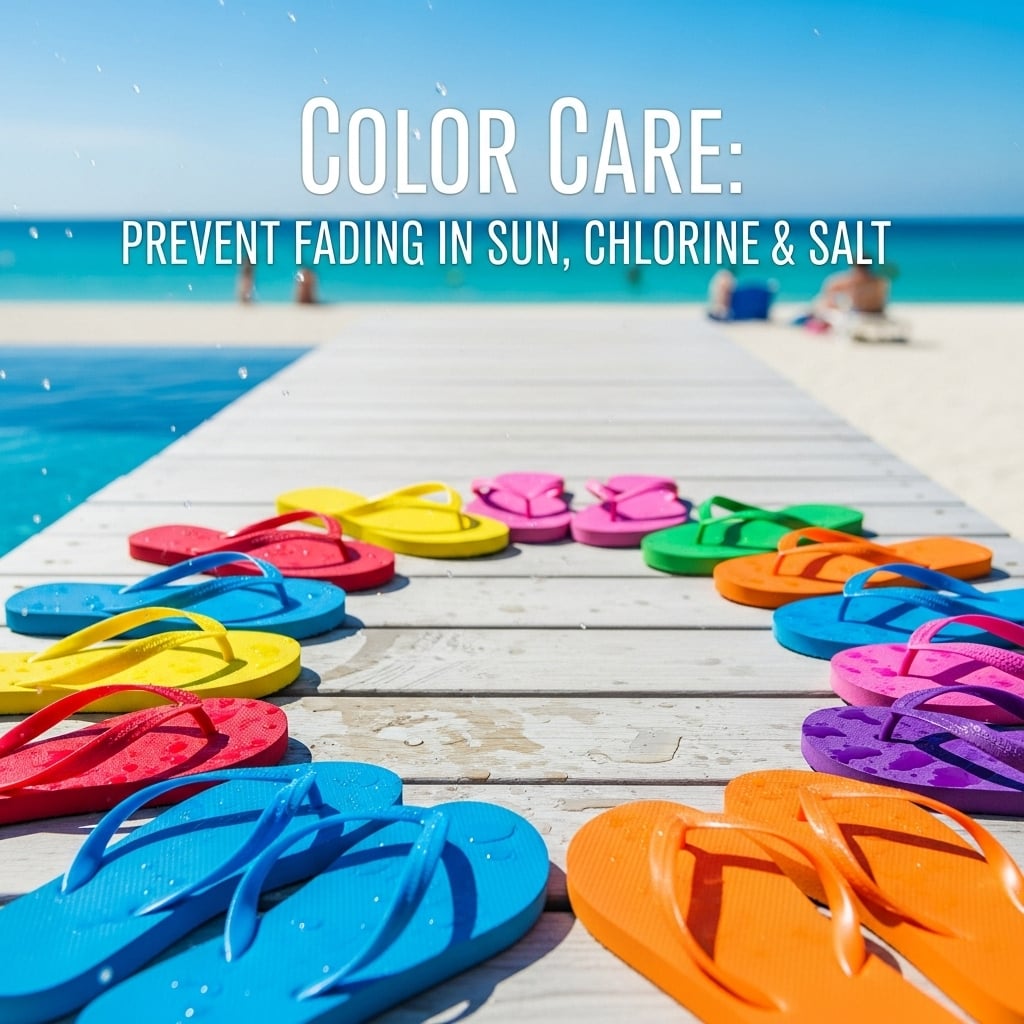
Color Care: Prevent Fading in Sun, Chlorine & Salt
Keeping your flip-flops and sandals looking vibrant is not always easy—especially when they spend most of their time exposed to sunlight, pool chlorine, ocean saltwater, and heat. Just as strap styles and material choices affect how comfortable and supportive your footwear feels, they also determine how well colors hold up over time. The good news: with proper color care, you can keep your sandals fresh, bright, and beautiful throughout the season without sacrificing wearability.
This guide explores how sun, chlorine, salt, and even daily wear impact the pigments in your sandals, and what you can do—before and after each use—to prevent fading. Whether you prefer toe-post styles, soft fabric thongs, or modern slide sandals, the same principles apply: the right materials and proper aftercare make a big difference in long-term appearance and durability.
Why Flip-Flop Colors Fade
Brightness and vibrancy depend on the quality of dyes and the type of materials used in your footwear. EVA, rubber, PVC, and fabric straps all react differently to environmental stress. While comfortable strap styles and footbed materials help with fit and stability, they also determine how fast colors break down when exposed to:
- UV rays from the sun: Heat and ultraviolet radiation weaken dye molecules, especially on rubber and fabric straps.
- Chlorine in pools: Chlorine breaks down organic pigments and dries out materials, making fading happen faster.
- Saltwater: Salt can leave dull residue and draw moisture out of the material, accelerating discoloration.
- Sand abrasion: Friction from grains of sand wears away surface color, especially on printed footbeds.
- Heat exposure: Leaving sandals in a hot car or under direct sun can warp, dry, or fade colors.
Understanding how color fades is the key to protecting your footwear long-term. Choosing the right strap type and materials can also help because structured, wider straps reduce the amount of sun-exposed surface area and minimize rubbing that causes wear.
How Sun Exposure Affects Color
UV light is one of the strongest fading agents. The sun doesn’t just lighten the color—it breaks down the chemical bonds inside the dyes. Some materials, especially soft fabric or printed designs, are more vulnerable than molded rubber. Thin, minimal straps (like basic toe-post designs) can fade faster because more of their surface is exposed to direct sunlight, while wide straps often protect more of the underlying footbed.
To reduce sun fading:
- Keep your flip-flops in shaded areas when not worn.
- Avoid drying them under direct sunlight for long periods.
- Use UV-protection spray made for shoes (safe for rubber and fabric).
- Choose darker colors or naturally UV-resistant materials if you spend long hours outdoors.
Toe-post styles are often popular for the beach, but fabric thongs and slides may hold color better depending on material thickness and UV stability.
How Chlorine Damages Color
Chlorinated water is harsh on any textile or rubber product. It strips natural oils, dries the material, and breaks down dyes with repeated exposure. Pool days can be tough on sandals, especially if the straps or footbeds are made of printed or fabric materials. Synthetic materials like EVA and molded rubber resist fading better, but chlorine still leaves residue that dulls shine.
To prevent chlorine fading:
- Rinse your sandals immediately with fresh water after pool use.
- Use a gentle soap to remove chlorine residue—don’t scrub hard.
- Let them air dry indoors, away from direct heat.
- Avoid leaving them poolside in the sun, where chlorine + UV causes accelerated fading.
Slide-style sandals typically have more surface area exposed to pool water, so they require consistent rinsing. Toe-post sandals with fabric straps need extra care since fabric absorbs chlorine more quickly.
How Saltwater and Beach Conditions Affect Color
Saltwater can leave a thin film on the surface of your sandals, making them look dull or chalky. Combined with the abrasive nature of sand, printed and lightly-textured footbeds can wear down faster. Salt also pulls moisture out of materials, causing stiffness, discoloration, or fading if not treated.
To protect colors at the beach:
- Rinse sandals with clean water after every ocean swim.
- Remove sand gently without harsh brushing.
- Pat-dry with a soft towel before storing.
- Avoid leaving sandals half-buried in hot sand for long periods.
Strap style also matters outdoors. Toe-post designs tend to accumulate sand around the post, which can cause rubbing and print wear. Slides offer easier cleaning but expose more surface area to sun and salt, requiring frequent rinsing.
Choosing Materials That Resist Fading
While strap style affects comfort, the underlying material determines color longevity. Some materials naturally resist fading better than others.
Rubber or Rubber-Blended Sandals
Rubber retains pigment extremely well and resists water damage. It’s ideal for beach, pool, and everyday wear because it holds up under UV and chemical exposure longer than fabric or foam.
EVA (Ethylene Vinyl Acetate)
Lightweight and flexible, EVA is popular in flip-flops and slides. It handles sun and salt fairly well but may fade if stored in extreme heat. Printed EVA footbeds are more vulnerable than solid colors.
Fabric Straps
Comfortable and soft, fabric straps are more prone to absorbing water, salt, and chlorine, which leads to quicker fading. Proper rinsing and quick drying are essential.
PU or PVC Straps
These synthetic materials resist fading better than fabric but can still be damaged by prolonged UV exposure or high temperatures.
Daily Color Care Routine
With a few simple habits, you can keep your sandals looking vibrant longer—even with frequent outdoor use.
- Rinse after every swim: Whether pool or beach, fresh water is your best defense against fading.
- Dry in the shade: Sun drying speeds up bleaching and damages glues and pigments.
- Store in cool areas: Avoid car dashboards, hot patios, and direct heat sources.
- Clean straps regularly: Sweat and sunscreen build up can dull colors over time.
- Avoid harsh chemicals: Bleach, alcohol, and strong detergents strip color layers.
- Rotate pairs: Don’t rely on one pair for daily sun and water exposure.
Protecting Printed Footbeds
Printed designs—especially colorful patterns—fade faster because the ink sits closer to the surface. Sand abrasion, sun exposure, and constant friction from your instep gradually wear the print down.
To preserve printed footbeds:
- Avoid dragging your feet or twisting your heel against the print.
- Rinse away sand instead of scraping it off.
- Keep them dry when storing to avoid moisture-related dulling.
- Alternate between printed and solid color pairs for high-sun days.
Best Practices for Travel & Summer Adventures
Travel exposes your sandals to multiple fading factors—intense sun, resort pools, beach days, and long hours outdoors. With the right habits, you can protect your footwear during trips:
- Bring at least two pairs—one for water, one for casual walking.
- Pack sandals in a breathable pouch, not sealed plastic.
- Rinse immediately after swimming to prevent buildup.
- Let sandals dry fully before packing to avoid discoloration.
Slides or fabric-thong sandals often work well for walking, while rubber toe-post options handle water exposure more efficiently. Rotating styles helps minimize overall fading.
When Fading Is Unavoidable
Even with perfect care, all footwear experiences normal wear over time. Sun, salt, and chlorine each take their toll, especially on lighter pastel colors and printed designs. Instead of trying to eliminate fading completely, aim to slow it significantly while keeping your sandals healthy, comfortable, and well-maintained.
Much like choosing strap styles that support your feet and prevent rubbing, choosing materials and adopting proper care routines ensures your footwear stays bright longer and maintains its original charm.
Final Thoughts on Color Care
Color fading is a natural part of a sandal’s life—but with mindful care, you can protect your flip-flops from sun damage, chlorine exposure, and saltwater dulling. Rinse after every swim, dry in the shade, avoid high-heat storage, and choose durable materials with better color retention. With the right habits, your sandals will stay vibrant, stylish, and summer-ready far longer.
By combining smart material choices, thoughtful wear, and consistent maintenance, you can preserve the look of your favorite toe-post, fabric-thong, or slide-style flip-flops season after season.