







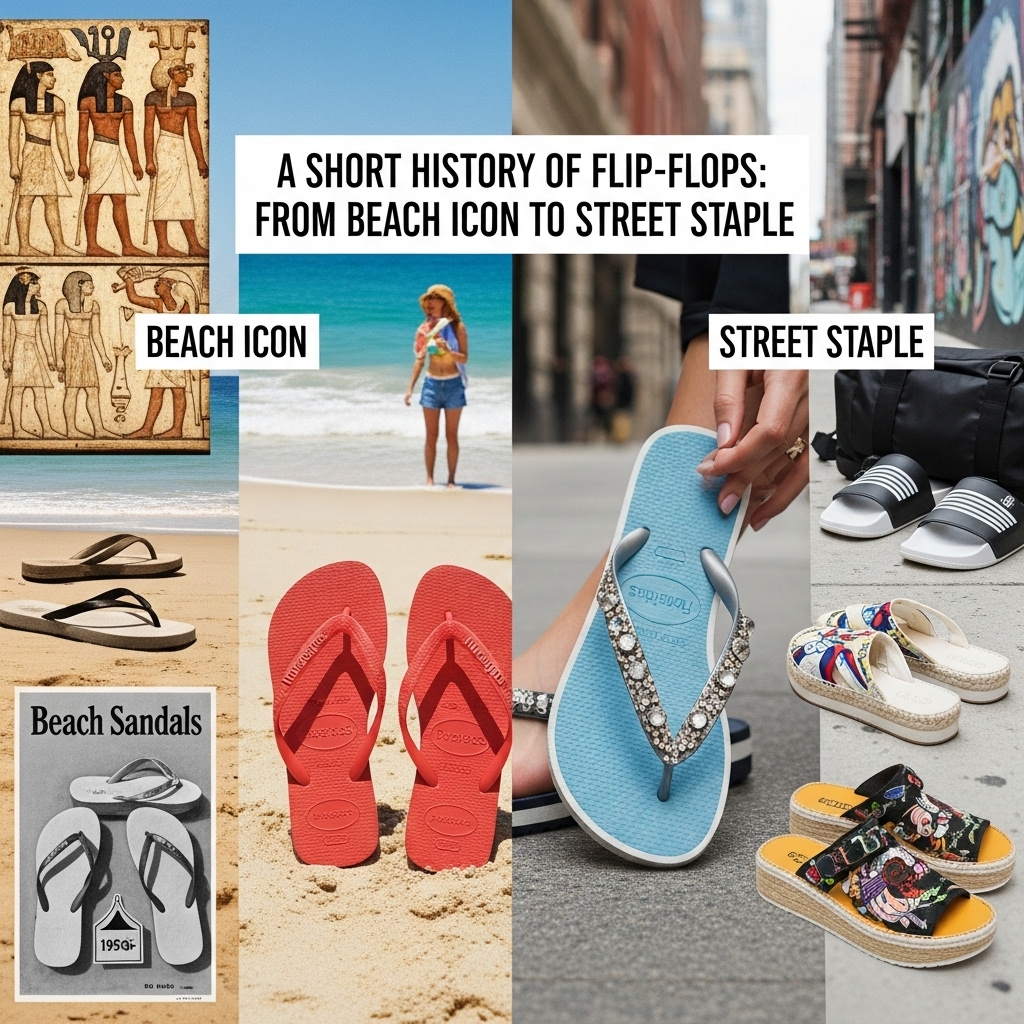
A Short History of Flip-Flops: From Beach Icon to Street Staple
Flip-flops are so simple and ubiquitous today that it’s easy to forget they have a long, global history that spans thousands of years. What began as a practical toe-post sandal has transformed into a cultural symbol of beaches, freedom, summer, and effortless comfort. Today, flip-flops aren’t limited to vacation wardrobes—they’ve entered streetwear, travel essentials, and everyday errand outfits, thanks to major improvements in strap design, footbed contouring, and durable materials.
Using the same reference principles found in modern fit and strap-style guides—secure toe-post construction, soft fabric thongs, stable slides, cushioned footbeds, and water-friendly materials—this article traces the evolution of the flip-flop from ancient civilizations to contemporary style culture.
Ancient Beginnings: The First Toe-Post Sandals
The earliest known flip-flop–like footwear dates back more than 4,000 years. Ancient Egyptians wore toe-post sandals made from plant fibers such as papyrus and palm leaves. The toe-post, or “thong,” was already a defining feature—one that has persisted across millennia.
Other civilizations also developed their own versions:
- Greece: Leather thong sandals worn by both men and women.
- Rome: Toe-post sandals with leather outsoles for durability.
- India: Wooden “paduka” sandals with a toe knob instead of straps.
- Japan: Zōri sandals with fabric thong straps—direct ancestors of modern flip-flops.
The common thread across all of these cultures was the functional brilliance of the toe-post: it anchored the foot securely without enclosing it, allowing natural movement and ventilation—core principles that continue to shape modern flip-flops.
Japan’s Zōri: The Biggest Influence on Modern Flip-Flops
The flip-flop design most recognizable today traces directly back to Japanese zōri. Traditionally made with woven rice straw sole and soft fabric straps, zōri were used for everyday walking and paired with traditional clothing.
After World War II, American soldiers brought these sandals home from Japan. Their lightweight design, comfort, and easy wearability quickly gained attention. Western manufacturers soon began producing rubberized versions that mimicked the zōri strap layout but improved durability with modern materials.
The Birth of the Modern Flip-Flop (1950s–60s)
As global manufacturing expanded, rubber flip-flops became affordable, water-friendly, and extremely popular. The 1950s and 60s marked the shift from traditional to contemporary beach-ready sandal.
Key changes during this era:
- Rubber replaced woven soles for durability and comfort.
- Bright colors and playful prints became common.
- Mass production reduced costs and increased accessibility.
- The flip-flop became a symbol of coastal leisure and surf culture.
The “flip-flop” name itself comes from the sound the sandal makes while walking—a sound that became part of beach identity.
1960s–1980s: Surf Culture Turns Flip-Flops Into Icons
California, Hawaii, Brazil, and Australia formed the epicenter of flip-flop culture during the late 20th century. Surfers embraced them because they were:
- heat-resistant,
- quick-drying,
- perfect for sandy feet,
- and easy to kick on and off while jumping in the water.
Brands began focusing heavily on strap style and durability, perfecting the Y-shaped toe-post design. Some pairs also introduced textured footbeds that improved grip during wet use—an early example of comfort engineering still used today.
By this point, flip-flops had evolved from simple casual footwear into cultural identifiers associated with freedom, surf, and relaxed living.
1990s–2000s: Global Brands & Lifestyle Fashion
As the world embraced warm-weather casualwear, flip-flops moved from the beach to everyday life. This era introduced:
- Multiple strap styles such as fabric thongs, padded straps, and wide slides.
- Improved EVA cushioning for better shock absorption.
- Printed footbeds with vibrant designs.
- Heat- and UV-resistant materials for lasting color.
- Brand-led identity that turned flip-flops into fashion staples.
Brazilian and Australian brands became global icons, shaping the perception of flip-flops as quality lifestyle footwear instead of disposable beach shoes.
The Rise of Modern Comfort Technology
Reference-inspired elements—strap engineering, footbed contouring, outsole grip, and improved materials—transformed flip-flops into supportive, reliable everyday sandals.
Modern features include:
- Arch support and molded heel cups.
- Soft fabric-thong straps that eliminate friction.
- Durable rubber outsoles with traction patterns.
- Slides designed for fashion-forward looks.
- Eco-friendly materials like recycled EVA and natural rubber.
Flip-flops are no longer just flat foam; they incorporate ergonomic research and thoughtful design—making them suitable for more occasions than ever.
From Beach Icon to Street Staple
Today, flip-flops have crossed into mainstream street style. They pair with athleisure outfits, resort wardrobes, casual denim looks, and even minimalist city fashion. Slides dominate urban wear, while toe-post sandals remain the ultimate warm-weather essentials.
This shift reflects:
- a global preference for comfort,
- the rise of casual dress codes,
- advances in material science,
- and the continued evolution of strap and footbed design.
What started as ancient functional footwear now anchors modern-day summer fashion.
Why the Flip-Flop Endures
The longevity of flip-flops across cultures and centuries comes down to a few simple truths:
- They allow natural foot movement.
- They keep feet cool in warm climates.
- They’re easy to clean and water-friendly.
- They’re lightweight and packable.
- They balance simplicity with comfort engineering.
Whether crafted from straw, wood, leather, rubber, or EVA, the same toe-post concept remains at the heart of every pair—and it continues to work brilliantly.
Final Thoughts
From ancient zōri and Egyptian sandals to modern EVA footbeds and stylish slides, flip-flops have traveled an extraordinary path. Once purely functional, they evolved into cultural icons of relaxation, beach life, and warm-weather joy. Today, thanks to improved strap design, better materials, and ergonomic comfort features, they’ve become everyday essentials worldwide.
What was once simple footwear has become a symbol—of summer, of ease, and of global style. The flip-flop’s story proves that even the simplest designs can have the most enduring impact.